
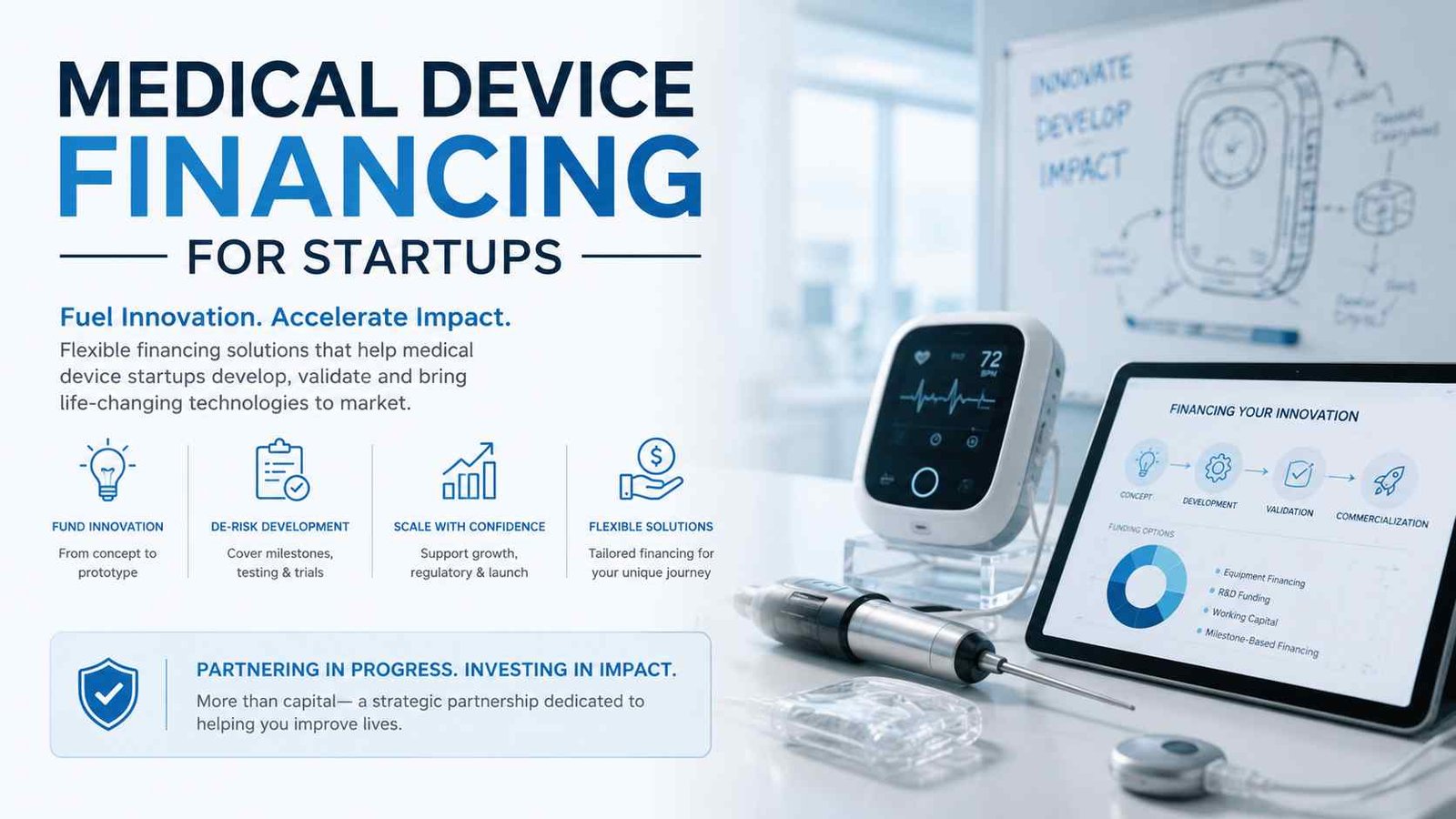
Starting a clinic sounds exciting on paper. New space, fresh equipment, a growing patient list. Then the bills start stacking up. Equipment alone can feel like the biggest hurdle, and not just because of the price tag. It is the timing, the pressure to get it right early, and the quiet fear of overspending before revenue settles in. That is where medical device financing starts to make practical sense. Not as a flashy solution, but as a way to keep things moving when cash is tight and decisions cannot wait.
Why Equipment Decisions Feel So Heavy Early On
Most new clinics do not lack ambition. What they lack, usually, is breathing room. Cash reserves are limited, revenue is still stabilizing, and every dollar seems to have three jobs. Medical devices, unfortunately, do not come cheap. Even basic diagnostic tools can strain a startup budget. Waiting to buy outright might seem safe, but it often slows things down more than expected. With loans for medical equipment, the decision shifts a bit. Instead of asking, Can this be paid for today? the question becomes, “Can this be supported over time?” That small shift changes a lot.
What Medical Device Financing Really Means
At its core, medical device financing allows clinics to acquire equipment without paying the full amount upfront. Payments are spread out usually in fixed intervals, helping to conserve working capital for other needs. It sounds straightforward, and it mostly is. But the real benefit is not just spreading cost. It is keeping operations flexible during those early months when everything feels slightly uncertain. Healthcare equipment financing, as a broader category, works in a similar way but can include bundled services or maintenance depending on the lender. That distinction matters more than it first appears.
Eligibility Is Not Always Straightforward
Startups often run into a familiar issue. Lenders like stability, and new clinics, well, do not have much of it yet. Approval for medical device financing usually depends on a few factors:
- Strength of the business plan and revenue projections
- Credit profile of the founders or partners
- Type and resale value of the equipment
Existing financial obligations
A strong plan can offset a short history, though not always completely. Some lenders are making heavy use of projected earnings, particularly in healthcare, where demand is often fairly stable. Others remain wary. Medical equipment lending providers who specialize in healthcare tend to be more flexible. They understand the early-stage pressure, which helps.
Common Financing Options for New Clinics
Not every financing route works the same way. Some work better for fast-changing technology and some make more sense for long-term assets. Here is a quick look at the typical choices:
- Equipment loans that lead to ownership after repayment
- Leasing arrangements for short-term or upgrade-heavy equipment
- Vendor financing offered directly by suppliers
- Revolving credit lines for flexible equipment purchases
Leasing often works well for devices that become outdated quickly. Loans, on the other hand, fit equipment with a longer lifecycle. That balance is not always obvious at first.
The Real Trade-Offs (Because They Exist)
It is easy to focus on access and convenience, but medical device financing comes with trade-offs. Interest increases the overall cost. Even if patient volume drops, payment commitments stay the same. And sometimes, equipment gets outdated before it is fully paid off. That last one stings more than expected. Still, many clinics accept these trade-offs because the alternative—delayed growth or under-equipped operations—can cost more in the long run. There is no perfect option here. Just better or worse fits depending on timing.
Practical Ways Startups Can Improve Approval Chances
Getting approved, especially early on, takes a bit more effort. Not complicated, just more deliberate. Some approaches that tend to help:
- Build a clear, realistic business plan with actual numbers
- Keep personal and business credit in decent shape
- Start with smaller financing requests if possible
- Work with lenders experienced in healthcare
- Keep financial documents organized and updated
It is not about impressing lenders. It is about reducing uncertainty from their side.
Why Timing Matters More Than Price
Many startups focus heavily on cost, which makes sense. But timing often plays a bigger role than expected. Saving money by waiting to buy equipment can slow patient acquisition. It can also narrow service offerings early on, which impacts reputation. Medical device financing helps align equipment availability with operational needs, not just budgetary constraints. That alignment tends to support smoother growth, even if it comes with additional cost.
The Subtle Benefits That Do Not Show Themselves Immediately
Some benefits of financing are not immediately apparent. For instance, spreading payments out leaves cash available to hire or market. That flexibility can affect how quickly a clinic gets off the ground. Also, consistent repayment builds credit history, which helps with future funding. Healthcare equipment financing can also include service or upgrade options, so you don’t have to worry about unexpected repair costs. That predictability matters more than expected in early-stage operations. It is not dramatic, but it adds stability.
Where Medical Equipment Lending Fits In
Medical equipment lending plays a slightly different role. Generally it is more aligned to structured loans rather than flexible arrangements. This can work well for clinics that already have a clear idea of their equipment needs and future plans. Less flexibility, but more clarity. Some founders prefer that. Others do not. And that is fine.
A Slight Reality Check
Not every financing decision works out perfectly. Some clinics overestimate patient flow. Others invest in equipment that takes longer to pay off. That happens. It does not mean financing was a mistake, just that assumptions did not fully line up with reality. Still, compared to staying under-equipped, many clinics find the risk acceptable. Growth, after all, rarely happens without some level of calculated pressure.
Conclusion
Medical device financing is less about access to money and more about managing timing. For new clinics, that timing can make or break early momentum. Used thoughtfully, it helps bring in the right equipment sooner, supports smoother operations, and keeps cash available for other priorities. Used without planning, it can stretch finances thin. So the real decision is not whether to use financing. It is how it fits into the broader plan of building a stable, functioning clinic. Because early-stage growth is rarely clean or perfectly timed. It is uneven, sometimes messy, and often shaped by small financial choices made along the way. Medical device financing just happens to be one of the more important ones.
Looking for more Article? Check out my website for the latest content.