
Introduction
In recent years, healthcare has been shifting toward smarter, more personalized treatment methods. People no longer want quick fixes they want long-term solutions that actually improve how their body functions. This is where kinervus is emerging as a modern and thoughtful approach in the world of rehabilitation and wellness. It focuses on how movement and the nervous system work together instead of treating the body as separate parts.
Kinervus is gaining attention online because it reflects a growing trend in healthcare: treating the root cause instead of just the symptoms. Many people struggle with recurring pain, slow recovery, or incomplete healing after injuries. Traditional methods sometimes fail to address deeper issues related to coordination and nerve signaling. Kinervus offers a more complete understanding of how the body heals and moves.
For example, imagine someone recovering from a knee injury. Traditional therapy may focus only on strengthening the muscles around the knee. However, kinervus looks deeper how the brain controls that movement, whether the walking pattern is correct, and how the nerves are communicating. This broader approach is why kinervus is becoming increasingly relevant in physiotherapy and wellness programs.
Meaning and Concept of Kinervus
The concept of kinervus is simple but powerful. It focuses on the connection between movement and the nervous system. Instead of looking at muscles alone, kinervus considers how the brain, nerves, and body movements are all linked together. This helps create a more complete and effective approach to healing and physical performance.
From a professional point of view, kinervus is not yet a standard medical term found in textbooks. It can be seen as a modern concept or even a developing method used by certain therapy professionals. In some cases, it may also be used as a brand name for clinics or specialized rehabilitation services. This flexibility makes it both unique and adaptable.
To understand it better, think of a person who has back pain. The issue might not be the back itself—it could be poor posture, incorrect movement habits, or weak communication between the brain and muscles. Kinervus works on fixing these deeper issues. This is what makes it sound scientific and modern, as it aligns with current trends in healthcare that focus on system-wide improvement rather than isolated treatment.
Origin and Etymology of Kinervus
The word kinervus is formed by combining two meaningful roots that reflect its purpose. The first part, “kine,” comes from kinesiology, which is the study of human movement. It represents motion, physical activity, and how the body performs tasks in daily life. The second part, “nervus,” is derived from Latin and refers to nerves or the nervous system.
When combined, kinervus essentially means the connection between movement and nerves. This meaning perfectly matches the concept behind it. It highlights that movement is not just about muscles working it is about how the brain and nerves control those muscles. This deeper understanding is what makes kinervus different from traditional approaches.
For example, consider a child learning to walk. It is not just about strong legs. The brain must learn balance, coordination, and timing. If any part of this system is not working properly, movement becomes difficult. Kinervus focuses on improving this entire system, which is why the name fits so well within modern rehabilitation practices.
Kinervus in Physiotherapy and Rehabilitation
In physiotherapy, kinervus represents a shift toward more advanced and integrated treatment methods. Traditional physiotherapy often focuses on exercises that strengthen muscles and reduce pain. While these methods are helpful, they may not always address the underlying cause of the problem.
Kinervus introduces a broader approach by focusing on neuromuscular coordination. This means improving how the nervous system and muscles work together. Instead of just making muscles stronger, it helps the body move more efficiently and naturally. This leads to better long-term results and reduces the chances of recurring injuries.
For example, an athlete recovering from a shoulder injury might regain strength but still feel discomfort during movement. With a kinervus approach, therapy would include retraining movement patterns and improving nerve signals. This ensures the shoulder works correctly in real-life situations, not just during exercises. This personalized and functional approach makes kinervus highly effective in modern rehabilitation.
How Kinervus Works
Kinervus works by improving the communication between the brain, nervous system, and muscles. Every movement we make starts in the brain. Signals travel through the nervous system to the muscles, telling them how and when to move. If this communication is disrupted, movement becomes inefficient or painful.
A key concept behind kinervus is neuroplasticity, which is the brain’s ability to adapt and form new connections. This means the body can relearn movements even after injury or damage. Kinervus uses targeted exercises to stimulate this process, helping the brain and body work better together.
For instance, a stroke patient may lose the ability to move one side of their body. Through repeated and guided movements, kinervus-based therapy helps the brain create new pathways. Over time, the patient regains control and coordination. This scientific foundation is what makes kinervus a powerful tool in recovery and rehabilitation.
Key Services or Applications of Kinervus
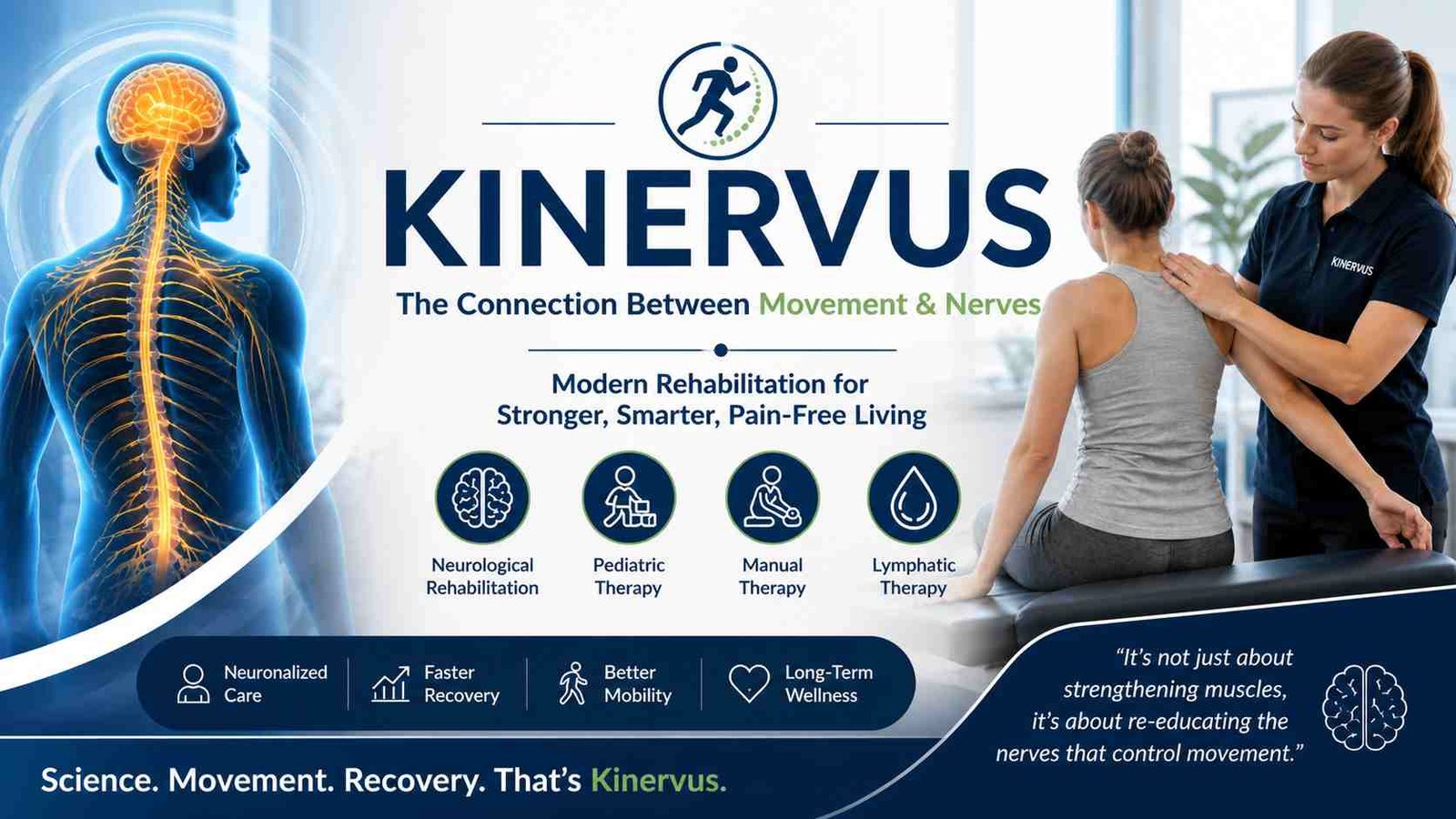
Kinervus can be applied in multiple areas of healthcare, making it a versatile approach. One major application is neurological rehabilitation, where it helps patients recover from strokes, nerve injuries, and balance issues. By rebuilding neural pathways, it supports better movement and coordination.
In pediatric physiotherapy, kinervus is used to help children with developmental delays. Therapists often use play-based activities to encourage movement while stimulating the nervous system. This makes therapy enjoyable while still being effective. Children gradually develop better motor skills and coordination.
Kinervus is also used in manual therapy and lymphatic therapy. For example, a patient recovering from surgery may experience swelling and limited movement. Kinervus techniques can improve circulation, reduce swelling, and restore normal movement patterns. This combination of applications shows how flexible and effective the approach can be.
Benefits of Kinervus Approach
One of the biggest benefits of kinervus is personalized treatment. Every patient is different, and kinervus takes this into account by creating customized therapy plans. This ensures that the treatment is more effective and suited to individual needs.
Another important benefit is faster recovery. By addressing both the nervous system and movement patterns, kinervus helps the body heal more efficiently. Patients often experience better results compared to traditional methods that focus only on physical exercises.
For example, someone with chronic pain may have tried multiple treatments without success. Kinervus can identify hidden issues in movement patterns or nerve communication, leading to long-term improvement. This makes it a valuable option for people looking for lasting solutions rather than temporary relief.
Why Kinervus is Different from Traditional Therapy
Kinervus stands out because it uses a holistic approach. Traditional therapy often treats symptoms, such as pain or stiffness. Kinervus, on the other hand, looks at the entire system, including how the brain and nerves control movement.
Another difference is its focus on root causes. Instead of just reducing pain, kinervus identifies why the pain is happening. This leads to more effective and long-lasting results.
For example, if someone has recurring knee pain, traditional therapy may focus on strengthening exercises. Kinervus would analyze walking patterns, posture, and nerve coordination. By fixing these underlying issues, the pain is less likely to return.
Who Needs Kinervus Therapy?
Kinervus therapy is suitable for many different people. Individuals recovering from injuries can benefit from improved movement and faster healing. Stroke patients can regain lost abilities through better nerve and muscle coordination.
Children with developmental challenges can also benefit. Kinervus helps improve motor skills, balance, and coordination, making everyday activities easier. The therapy is often designed to be engaging and fun for children.
Athletes and elderly individuals are also ideal candidates. Athletes can improve performance and prevent injuries, while older adults can maintain mobility and reduce fall risk. This wide range of applications makes kinervus highly valuable.
Kinervus and Modern Healthcare Trends
Kinervus aligns with current healthcare trends that focus on personalization and functional movement. More people are now looking for treatments that are tailored to their specific needs rather than general solutions.
There is also a growing integration of neuroscience in rehabilitation. Kinervus fits perfectly into this trend by focusing on how the brain and body work together.
For example, modern clinics are using advanced tools to analyze movement patterns. Kinervus can be combined with these technologies to create highly effective treatment plans. This shows how it is becoming part of the future of healthcare.
Future of Kinervus in Rehabilitation
The future of kinervus looks promising as healthcare continues to evolve. Advanced technologies like artificial intelligence and motion tracking can enhance its effectiveness.
Therapists may use data-driven insights to create even more personalized treatment plans. This will make kinervus more precise and efficient.
For example, wearable devices can track movement patterns in real time. This data can be used to adjust therapy sessions instantly, improving outcomes. As awareness grows, kinervus is likely to become more widely used.
Kinervus as a Brand vs Concept
Kinervus can function both as a concept and a brand. As a concept, it represents a modern approach to therapy. As a brand, it can be used by clinics to promote specialized services.
This dual nature creates strong marketing opportunities. A unique name like kinervus can help businesses stand out in a competitive market.
For example, a clinic using the kinervus approach can build trust by consistently delivering high-quality results. Over time, the term can become associated with effective and advanced therapy.
Pros and Limitations of Kinervus
Kinervus offers many advantages, including personalized care and a holistic approach. It focuses on long-term improvement rather than quick fixes, making it highly effective.
However, there are some limitations. It is still a developing concept, so awareness is limited. Not all clinics offer kinervus-based therapy.
For example, specialized treatment may be slightly more expensive. However, the long-term benefits often make it worth the investment.
FAQ’s
What makes kinervus different from other therapies?
It focuses on both movement and nervous system coordination, not just muscles.
Can kinervus help with long-term pain?
Yes, it addresses root causes, which can reduce chronic pain effectively.
Is kinervus suitable for children?
Yes, especially for improving motor skills and development.
How long does kinervus therapy take?
It depends on the condition, but results often improve steadily over time.
Is kinervus widely available?
It is still growing, so availability may vary by location.
Conclusion
Kinervus is not just a trend it is a meaningful shift in how we understand movement and recovery. By combining science, personalized care, and real-world application, it offers a powerful solution for modern health challenges. As awareness grows, kinervus has the potential to redefine rehabilitation and wellness, making treatments more effective and long-lasting.