
In today’s fast-moving digital landscape, keibann is emerging as a powerful framework designed to support startups, digital-first organizations, and modern work environments. As businesses increasingly rely on SaaS products, distributed teams, and lean startup models, the need for structured workflows, seamless communication, and efficient execution has become more critical than ever. Keibann helps bridge this gap by offering a system that enhances productivity while keeping teams aligned in real time.
At its core, keibann focuses on visual organization, project management, and strategic execution, making it ideal for companies aiming to scale بسرعة without losing clarity. By improving real-time alignment and simplifying complex workflows, it empowers teams to collaborate effectively, stay focused on goals, and deliver results faster. Whether you’re managing a startup or optimizing processes in a digital-first organization, keibann provides a practical approach to achieving higher productivity and better communication across teams.
What Is Keibann?
Keibann is a modern productivity framework designed to help teams manage workflows, improve communication, and achieve better execution in fast-paced digital environments. It combines elements of visual organization and project management to create a clear system where tasks, goals, and progress can be easily tracked. For startups, SaaS products, and digital-first organizations, it acts as a structured approach to boost productivity and maintain real-time alignment across distributed teams.
The concept of keibann is inspired by evolving work practices in lean startup culture and modern work environments, where flexibility and efficiency are essential. It is commonly used in contexts like project management, strategic execution, and team collaboration, especially in remote or hybrid setups. In simple terms, keibann can be understood as a method that visually organizes work and simplifies complex workflows, making it easier for beginners and teams to stay organized, communicate effectively, and deliver results faster.
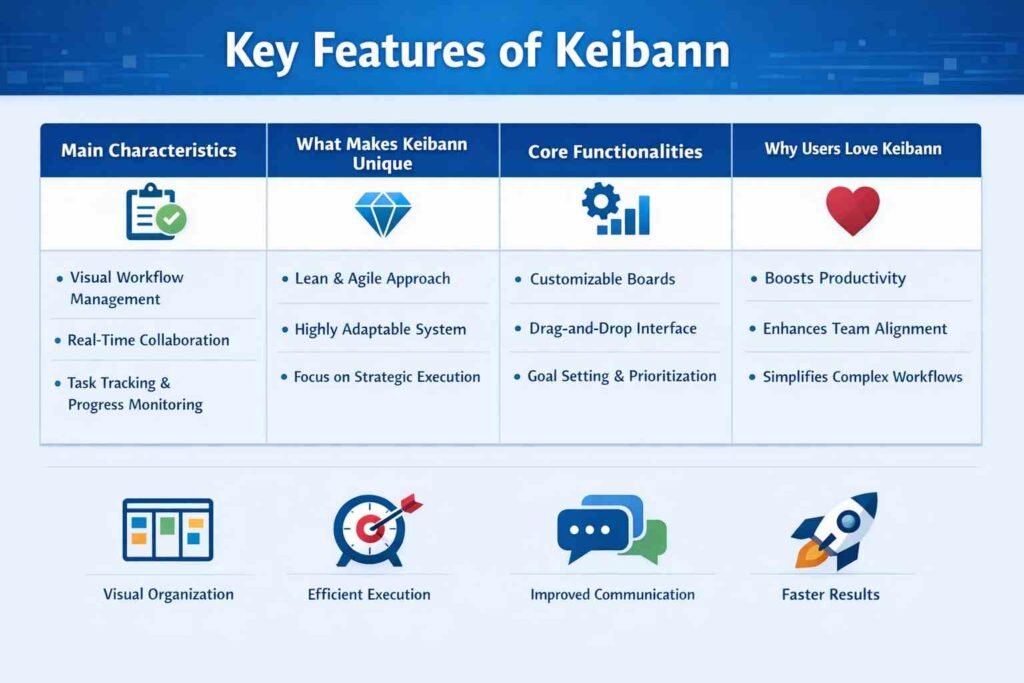
Key Features of Keibann
| Category | Details |
| Main Characteristics of Keibann | – Visual workflow management- Real-time collaboration for distributed teams- Task tracking and progress monitoring- Clear structure for modern work environments |
| What Makes Keibann Unique | – Combines lean startup and agile principles- Designed for digital-first organizations and SaaS products- Focus on strategic execution and real-time alignment- Highly flexible and adaptable framework |
| Core Functionalities | – Customizable boards for project management- Drag-and-drop task organization- Workflow automation and prioritization- Integrated communication within tasks |
| Why Users Are Interested in Keibann | – Improves productivity and efficiency- Simplifies complex workflows- Enhances team communication and execution- Helps startups scale faster with better organization |
How Keibann Works in Practice
In real-world scenarios, keibann works as a structured yet flexible system that helps teams manage workflows, improve communication, and execute tasks efficiently. It typically starts with creating a visual workspace (such as boards or dashboards) where all tasks are organized into stages like “To Do,” “In Progress,” and “Completed.” This visual organization allows startups, SaaS product teams, and digital-first organizations to clearly see what needs to be done, who is responsible, and how work is progressing in real time.
As work moves forward, team members update tasks, collaborate through built-in communication tools, and adjust priorities based on changing goals. Keibann supports distributed teams by ensuring real-time alignment, so everyone stays on the same page regardless of location. By combining project management, strategic execution, and productivity-focused workflows, it helps organizations streamline execution, reduce confusion, and deliver results faster in modern work environments.
Types of Keibann
Although keibann is a flexible framework, it can be applied in different ways depending on the needs of teams, startups, and digital-first organizations. These variations help adapt keibann to specific workflows, industries, and team structures.
Different Variations or Categories of Keibann
| Type of Keibann | Description | Best For |
| Basic Keibann | Simple visual boards with task stages like To Do, In Progress, Done | Beginners, small teams |
| Agile Keibann | Combines agile principles with iterative workflows and fast execution | Startups, product teams |
| SaaS-Based Keibann | Cloud-based tools with automation, integrations, and real-time updates | SaaS companies, remote teams |
| Enterprise Keibann | Advanced system with analytics, reporting, and multi-team coordination | Large organizations |
| Lean Keibann | Focused on lean startup methodology, minimizing waste and maximizing efficiency | Entrepreneurs, lean startups |
Benefits of Keibann
Keibann offers a wide range of benefits for startups, SaaS products, and digital-first organizations by improving how teams manage workflows, communication, and execution. One of the key advantages of keibann is its ability to provide clear visual organization, allowing teams to track tasks, monitor progress, and stay aligned in real time. This transparency helps reduce confusion, improves accountability, and ensures that everyone knows their role in the overall project.
Another major reason people prefer keibann is its strong focus on efficiency and productivity. By simplifying complex workflows and enabling better communication across distributed teams, it helps organizations complete tasks faster and with fewer errors. Over the long term, keibann supports strategic execution by creating a structured framework that scales with business growth. This leads to consistent performance, better decision-making, and sustainable productivity in modern work environments.
Limitations or Drawbacks of Keibann
While keibann is a powerful framework for managing workflows and improving productivity, it does come with certain limitations. One possible disadvantage is that it relies heavily on consistent updates and team discipline—if tasks are not regularly maintained, the system can quickly become outdated and lose its effectiveness. Additionally, for very small teams or simple projects, keibann may feel overly structured, adding unnecessary complexity instead of simplifying work.
There are also some risks and situations where keibann may not be ideal. For example, teams that are not familiar with visual project management or digital tools may face a learning curve in the beginning. In highly dynamic environments with constantly shifting priorities, strict workflows can sometimes slow down quick decision-making. From a balanced perspective, keibann works best when teams are properly trained and committed to the process, but it may require adaptation to fit different work styles and organizational needs.
Keibann vs Alternatives
When comparing keibann with other workflow and project management approaches, it’s important to understand how it stands alongside similar tools and concepts like Kanban boards, Agile frameworks, and traditional project management systems. While many of these methods focus on task tracking and execution, keibann emphasizes a balanced mix of visual organization, real-time alignment, and strategic execution, making it especially useful for startups and digital-first organizations.
Comparison with Similar Concepts
| Aspect | Keibann | Kanban | Agile | Traditional Project Management |
| Approach | Visual + strategic framework | Visual workflow system | Iterative development method | Structured, step-by-step planning |
| Flexibility | High | High | Very high | Low to medium |
| Focus | Productivity + execution + alignment | Task flow management | Continuous improvement | Planning and control |
| Best For | Startups, SaaS, remote teams | Simple workflow tracking | Product development teams | Large, fixed-scope projects |
| Real-Time Collaboration | Strong | Moderate | Strong | Limited |
How to Use Keibann (Step-by-Step Guide)
Using keibann is simple and beginner-friendly, especially for startups and digital-first organizations looking to improve workflows and productivity. Follow these steps to get started effectively:
Step-by-Step Instructions
- Set Up Your Workspace
Create a visual board (digital or physical) and define stages like To Do, In Progress, and Completed. - Add Tasks and Goals
Break your projects into smaller tasks and assign them clearly to team members. - Organize Workflows
Arrange tasks based on priority and workflow stages to ensure smooth execution. - Enable Team Communication
Use built-in communication or comments to keep discussions connected to tasks. - Track Progress in Real-Time
Continuously update task status so everyone stays aligned and informed. - Review and Optimize
Regularly analyze workflows and improve processes for better productivity.
Keibann in Modern Trends
In today’s fast-evolving digital world, keibann plays an important role in helping startups and digital-first organizations manage workflows, improve communication, and maintain real-time alignment. As businesses shift toward SaaS products, distributed teams, and lean startup models, the need for structured yet flexible frameworks has increased. Keibann fits perfectly into this transformation by offering a visual and efficient approach to project management, allowing teams to track progress, identify bottlenecks, and streamline execution in modern work environments.
The online popularity of keibann is also growing, especially as more companies adopt remote work and digital collaboration tools. Its relevance continues to rise because it simplifies complex workflows and enhances productivity, which are key demands in today’s competitive market. Looking ahead, keibann has strong future potential with possible integration of advanced technologies like automation and AI, making workflows even smarter and more efficient. As organizations continue to scale and adapt to digital transformation, the adoption of keibann is expected to grow steadily, becoming a key framework for productivity, strategic execution, and team collaboration.
Common Mistakes to Avoid with Keibann
While keibann is a powerful framework for managing workflows and improving productivity, beginners often make a few common mistakes that can reduce its effectiveness. One major error is overcomplicating the system by adding too many workflow stages or unnecessary tasks, which makes it harder to manage instead of easier. Another misunderstanding is treating keibann as just a task list rather than a complete framework for communication, execution, and real-time alignment. Additionally, many teams fail to update tasks regularly, leading to outdated boards and poor visibility.
To avoid these issues, it’s important to keep keibann simple, structured, and consistently maintained. Start with a basic workflow and expand only when necessary, ensure all team members update tasks in real time, and use it as a collaboration tool rather than just a tracking system. Regular reviews, clear communication, and defined responsibilities can help fix most beginner mistakes. By following these practices, teams can fully leverage keibann to improve productivity, streamline workflows, and achieve better execution in modern work environments.
Conclusion
In summary, keibann is a powerful and flexible framework that helps startups, SaaS products, and digital-first organizations manage workflows, improve communication, and enhance overall productivity. From its visual organization and real-time alignment to its focus on strategic execution, keibann provides a structured approach that simplifies complex processes and supports efficient project management in modern work environments.
Looking ahead, the relevance of keibann is expected to grow as more businesses adopt remote work, distributed teams, and digital tools. Its ability to adapt to different workflows and scale with organizational needs makes it a valuable solution for long-term success. If you’re looking to improve team collaboration, streamline execution, and boost productivity, now is the right time to implement keibann in your workflow and experience its benefits firsthand.