
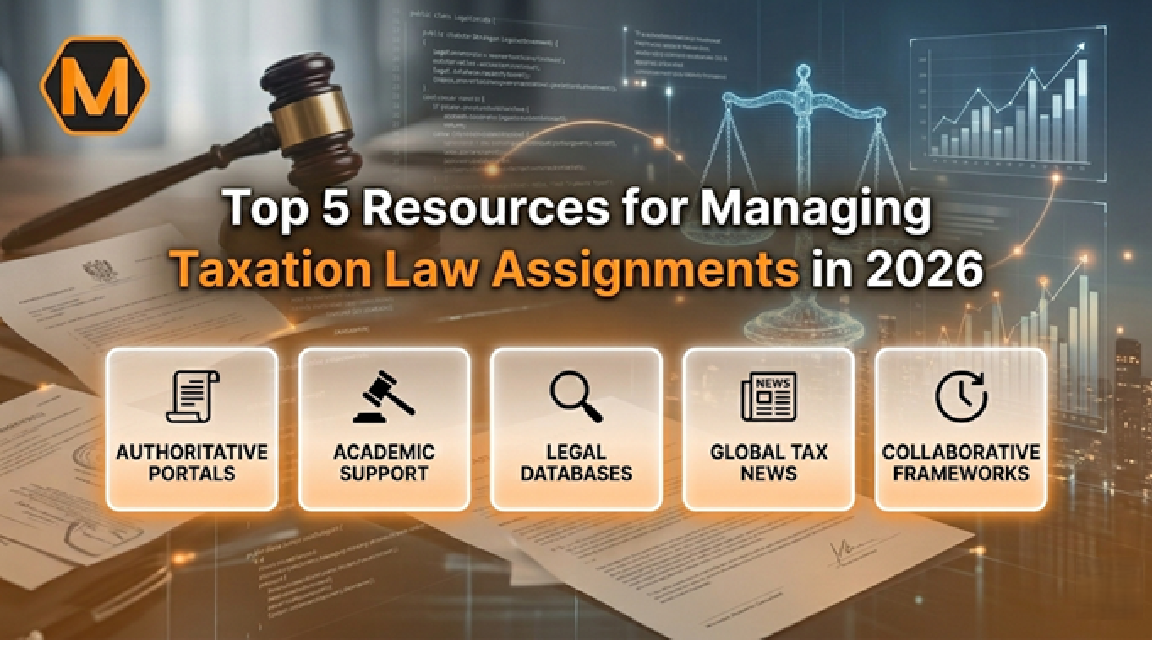
The academic landscape in 2026 is more demanding than ever, particularly for those pursuing a degree in law. Among the various legal modules, taxation law often stands out as the most intricate. It isn’t just about memorizing statutes; it is about understanding the intersection of economics, policy, and shifting global regulations. For an undergraduate student, balancing these complex case studies with other core modules requires a strategic approach and a reliable set of tools.
Navigating the sea of information available online can be exhausting. Many students find themselves overwhelmed by conflicting interpretations of tax codes or the sheer volume of reading required for a single submission. This is where professional guidance becomes an essential part of a student’s toolkit. Utilizing a reliable assignment helper can provide the clarity needed to structure arguments effectively, allowing you to focus on mastering the core principles of the law while ensuring your written work meets the high standards expected by university professors globally.
The Evolution of Taxation Law Studies
As we move further into 2026, the way students interact with legal materials has changed. We are no longer in an era where a single thick textbook contains all the answers. Modern tax law is living and breathing; it reacts to climate change policies, digital currency fluctuations, and international trade agreements. For the modern undergraduate, staying relevant means looking beyond the classroom.
The challenge lies in the “Global Tone” required for modern degrees. Whether you are studying in London, Sydney, New York, or Toronto, the principles of tax transparency and compliance remain universal. However, the application varies wildly. This article explores the top five resources that will help you bridge that gap between local statutes and global legal standards.
1. Official Government Portals and Digital Gazettes
The most authoritative source for any taxation law assignment will always be the primary legislation. In 2026, most governments have transitioned to highly interactive digital gazettes. These are not just PDFs; they are searchable, linked databases that show the history of a specific law. Whether you are studying the IRS codes in the US, the Finance Acts in the UK, or the ATO rulings in Australia, these portals provide the most recent amendments.
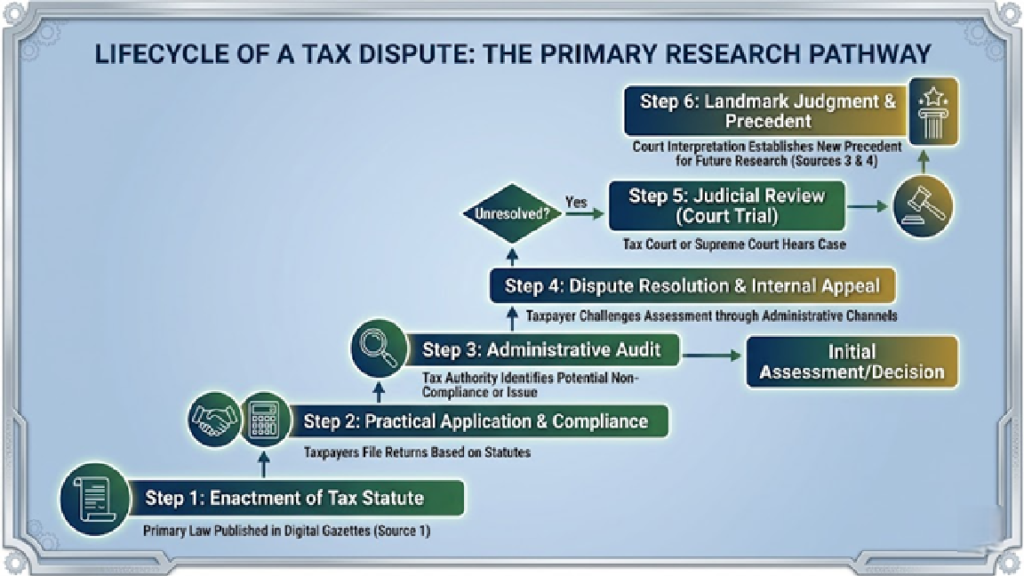
When writing your assignment, citing the original statute from an official portal demonstrates high-level research skills. It shows that you aren’t just relying on secondary textbooks, but are engaging with the law as it is written today. In a globalized world, understanding how to navigate these portals across different jurisdictions is a skill that will serve you well into your professional career.
2. Specialized Academic Support and Mentorship
Sometimes, even the best textbooks cannot explain a specific tax loophole or a complex corporate restructuring case. When self-study reaches its limit, seeking specialized academic intervention is a smart move. If you are specifically struggling with the nuances of income tax, capital gains, or international treaties, seeking Taxation Law Assignment Help from experts at MyAssignmentHelp Services can bridge that knowledge gap.
This type of targeted support ensures that your technical calculations are accurate and that your legal reasoning aligns with current judicial precedents. By collaborating with professionals who understand the specific requirements of undergraduate curricula, you can produce work that reflects a professional level of expertise. This approach doesn’t just help with one paper; it teaches you how to structure legal arguments that satisfy both academic rubrics and professional standards.
3. AI-Powered Legal Research Databases
By 2026, traditional libraries have been augmented by AI-driven research databases. Platforms like Westlaw, LexisNexis, and newer localized legal engines now offer “predictive analytics.” These tools help students see how certain tax laws have been applied in recent court cases, often identifying patterns that a human eye might miss during a first reading.
Using these tools allows you to find relevant case law in seconds rather than hours. For an undergraduate student, the ability to quickly cross-reference a statute with a landmark ruling is the difference between a passing grade and a distinction. These databases are excellent for finding “Information Gain”—the unique insights that Google and university professors value so highly.
Comparison of Primary Resource Types for 2026
| Resource Type | Best Used For | Level of Authority | Accessibility |
| Government Portals | Checking the latest legal amendments | Absolute (Primary Source) | High (Free) |
| Academic Services | Structuring arguments and technical accuracy | High (Professional Guidance) | High (Paid) |
| Legal Databases | Finding case law and judicial precedents | High (Research-driven) | Medium (Uni-Access) |
| University Journals | Critical analysis and scholarly opinions | Moderate (Secondary Source) | Medium (Subscription) |
| Global News Outlets | Understanding the impact of new tax policies | Low (Contextual only) | High (Free/Paid) |
4. Global Tax News and Economic Bulletins
Tax law does not exist in a vacuum; it is heavily influenced by the global economy. In 2026, staying updated with international bodies like the OECD or the World Bank is crucial. Many university assignments now ask students to discuss the “Global Minimum Tax” or how “Carbon Taxes” affect international shipping.
Subscribing to weekly newsletters from major accounting firms (the Big Four) or global financial news outlets provides you with the real-world context that examiners love to see. It transforms a dry legal essay into a contemporary analysis of how law affects global business. When you can cite a real-world example of a tax treaty being implemented, your work moves from “theoretical” to “expert.”
5. Collaborative Study Frameworks (The 3-2-2 Method)
The final “resource” is actually a methodology. In 2026, the most successful students are those who manage their time with precision. The 3-2-2 Method is a time-management framework designed specifically for dense subjects like law:
- 3 Hours of Deep Research: Focus exclusively on primary sources. Do not start writing yet. Understand the statute and the “spirit” of the law.
- 2 Hours of Drafting: Create your skeleton. Map out your introduction, your technical arguments, and your conclusion. This is where you integrate your academic research.
- 2 Hours of Refinement: Check your citations. In law, a misplaced comma in a citation can lose you marks. Ensure the tone is objective and the technical terms are used correctly.
The Importance of Human-Centric Writing in Law
Even in a tech-heavy world, the ability to explain complex law in simple, human terms is a superpower. When writing your assignments, avoid “legalese” for the sake of looking smart. Instead, focus on clarity. Google’s ranking algorithms and university professors both prefer content that is easy to digest. Use clear headings, bulleted lists for complex rules, and always provide a summary of your findings.
Conclusion: Staying Ahead in the Legal Field
Success in taxation law requires a blend of traditional research and modern support systems. By utilizing government portals for facts, professional services for structure, and AI databases for speed, you can navigate the 2026 academic year with confidence. Remember, the goal isn’t just to finish the assignment—it’s to master a subject that is fundamental to the global economy.
Frequently Asked Questions (FAQ)
Q1: Is it acceptable to use professional help for my law assignments?
Ans: Yes, using professional services as a tutoring and referencing tool is a common practice. It helps students understand complex formatting and technical requirements that are often not fully explained in large lecture halls. It acts as a bridge between theory and practice.
Q2: How do I ensure my taxation law assignment is up to date?
Ans: Always check the “Effective Date” of the legislation you are citing. Tax laws change annually with new budget sessions, so ensure you are using the 2025-2026 statutes rather than outdated versions from old textbooks.
Q3: What is the most common mistake in tax law essays?
Ans: The most frequent error is focusing too much on the math and not enough on the legal interpretation. You must explain why a specific tax rule applies to the scenario, not just provide the final calculation. The “why” is where the marks are.
Q4: How can I improve the readability of my legal writing?
Ans: Avoid “legalese” where possible. Use shorter sentences, clear bullet points, and ensure each paragraph focuses on a single core idea. This makes your work more accessible to both the examiner and a general audience.
Q5: Why is global context important for local tax assignments?
Ans: With the rise of remote work and digital nomadism in 2026, tax law is rarely confined to one country. Showing that you understand international tax implications makes your assignment stand out as forward-thinking.
About The Author
I am Min Seow, a dedicated digital content strategist and academic consultant associated with MyAssignmentHelp Services. With extensive experience in developing high-authority educational resources, I specialize in bridging the gap between complex professional standards and university-level curricula for undergraduate students globally.