
Introduction
Masgonzola is a modern culinary idea that has gained attention across food blogs, recipe searches, and social cooking platforms. Although it is not a traditional or officially recorded dish in Italian cuisine, it represents a creative combination of two well-known cheeses that are widely used in European cooking. The concept behind masgonzola revolves around richness, creaminess, and a balanced contrast of mild and strong flavors.
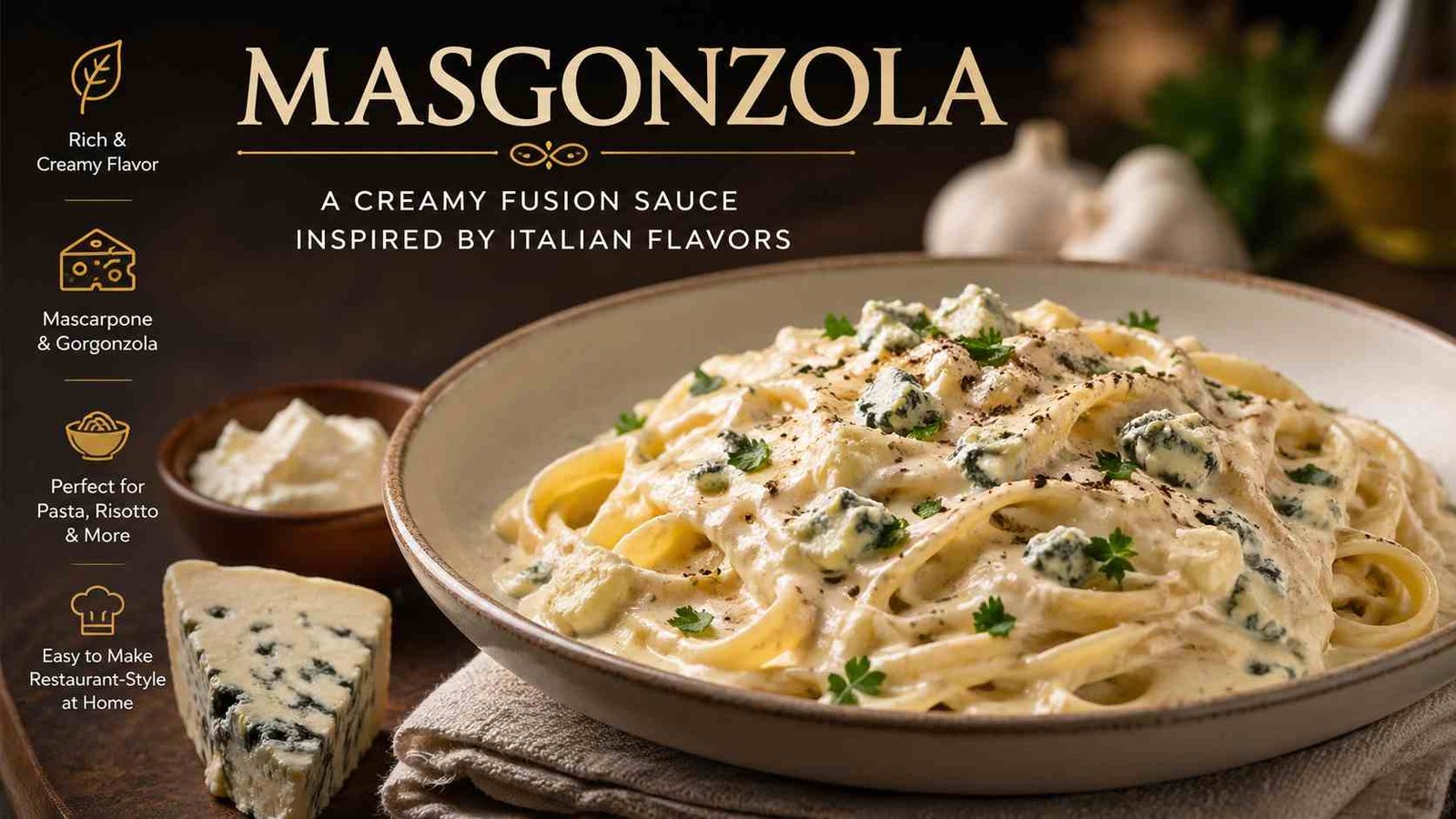
In simple terms, masgonzola is usually understood as a smooth, creamy sauce inspired by mascarpone and gorgonzola cheeses. One brings softness and a buttery texture, while the other adds depth and a slightly sharp taste. Together, they create a sauce that feels luxurious and comforting, often used in pasta, risotto, and baked dishes.
What makes masgonzola interesting is not just its flavor, but the way it reflects modern cooking trends. Today’s cuisine often mixes traditional ingredients in new ways, creating fusion dishes that feel both familiar and fresh. Masgonzola fits perfectly into this category, offering a rich experience for people who enjoy creamy, cheesy meals with a hint of boldness.
What Masgonzola Really Means
The word masgonzola does not come from classical Italian language or culinary history. Instead, it appears to be a blended term formed from two ingredients: mascarpone and gorgonzola. This kind of naming is common in modern food culture, where creators combine ingredient names to describe a new flavor idea.
Mascarpone is a soft Italian cream cheese known for its smooth texture and mild taste. It is often used in desserts like tiramisu but also works beautifully in savory sauces. Gorgonzola, on the other hand, is a blue cheese with a stronger, tangier profile. It brings character and depth to any dish it is added to.
When these two cheeses are combined, the result is a balanced sauce that is neither too mild nor too intense. The name masgonzola naturally reflects this combination, even if it is not officially recognized in traditional cooking.
This type of naming also shows how food trends evolve online. Many modern recipes gain popularity not because of historical roots, but because they offer a new and appealing flavor experience that people enjoy sharing and recreating.
Why Masgonzola Is Gaining Popularity
Masgonzola is becoming more popular mainly because people today enjoy discovering new and creative food combinations. In modern cooking, traditional recipes are often reimagined in fresh ways, and masgonzola fits perfectly into this trend. It offers a unique blend of creamy and tangy flavors that feels both familiar and new at the same time. This balance makes it attractive to food lovers who want something different from regular cheese sauces.
Another reason for its growing popularity is social media and food content platforms. Many recipes go viral not because they are traditional, but because they look appealing, easy to prepare, and delicious in presentation. Masgonzola-style dishes are often shared in pasta videos, creamy sauce recipes, and comfort food posts. This visual appeal encourages more people to try it at home, even if they had never heard of it before.
Lastly, masgonzola is popular because it is flexible and easy to use in many dishes. From pasta and risotto to pizza and grilled meat, it can enhance simple meals with a rich, restaurant-style taste. This versatility makes it suitable for both home cooks and food enthusiasts, which helps it spread quickly in everyday cooking culture.
Taste and Texture Experience
Masgonzola sauce has a rich and layered taste that appeals especially to cheese lovers. The first impression is creaminess, followed by a gentle tang that slowly develops on the palate. It is not overpowering, but it has enough character to stand out in a dish.
The texture is one of its most attractive features. It is smooth, thick, and velvety, allowing it to coat pasta or meat evenly. Unlike lighter cream sauces, masgonzola feels more indulgent and filling, making it suitable for comforting meals.
If compared to other sauces, it sits somewhere between Alfredo and four-cheese sauce. Alfredo is soft and buttery with a simple profile, while four-cheese sauces can be quite heavy and intense. Masgonzola finds a middle ground, offering depth without overwhelming richness.
For someone trying it for the first time, the best way to describe it would be: a creamy sauce with a gentle sharpness that enhances rather than dominates the dish.
Ingredients That Shape Masgonzola
Masgonzola sauce relies on a few simple but high-quality ingredients. Each one plays an important role in building flavor and texture.
Mascarpone cheese forms the creamy base. It melts easily and gives the sauce its smooth structure. Gorgonzola is added for its distinct tangy character, which balances the softness of mascarpone.
Heavy cream is often included to adjust consistency and make the sauce more fluid. Butter adds richness and helps create a smooth cooking base. Garlic is used to introduce aroma and depth, while black pepper adds a mild spicy note that enhances the overall taste.
Some variations also include herbs like thyme or parsley to give freshness and visual appeal. However, the core identity of masgonzola always comes from the combination of the two cheeses.
The simplicity of ingredients is one of the reasons this sauce has become popular. It does not require complex preparation, yet it delivers a restaurant-style flavor when done correctly.
How the Sauce Is Prepared
Making masgonzola sauce is a gentle process that depends more on patience than technique. The key is to maintain low heat so that the cheese melts smoothly without separating.
The process usually begins with butter being melted in a pan. Garlic is lightly cooked until it releases its aroma, creating a flavorful base. After that, cream is added and warmed slowly.
Once the mixture is warm, mascarpone is stirred in until it blends completely. This creates a smooth and thick foundation. Gorgonzola is then added in small portions, allowing it to melt gradually into the sauce.
At this stage, the sauce begins to develop its full character. If it feels too thick, a little cream can be added. If it is too light, it can be simmered gently for a few minutes to thicken.
Finally, seasoning is adjusted with black pepper and optional herbs. The result is a smooth, rich sauce ready to be served immediately with pasta, meat, or vegetables.
Best Ways to Use Masgonzola
Masgonzola is highly versatile and can be paired with many dishes. One of the most common uses is with pasta, especially varieties like fettuccine, penne, or tagliatelle. The sauce clings well to pasta, making every bite creamy and flavorful.
It also works beautifully in risotto, where it adds depth and a luxurious texture. When used as a topping for steak, it enhances the meat with a rich and slightly tangy layer of flavor.
Some people also use it as a base for pizza instead of tomato sauce, creating a creamy white pizza style. Additionally, it pairs well with gnocchi, where its softness complements the potato-based dumplings.
Because of its strong and creamy nature, masgonzola is best used in dishes that can balance richness with simple ingredients.
Comparison With Other Sauces
Masgonzola can be better understood when compared with other well-known sauces. Alfredo sauce, for example, is creamy but mild, relying mostly on butter and cheese without strong flavor contrast. Four-cheese sauces are more intense and often heavier, combining multiple strong cheeses.
Carbonara is different because it uses eggs and cured meat, giving it a savory rather than creamy identity.
Masgonzola stands out because it balances creaminess with a gentle tang, making it more complex than Alfredo but smoother than many multi-cheese sauces.
| Sauce Type | Flavor Style | Texture | Intensity |
| Masgonzola | Creamy + tangy | Smooth & thick | Medium |
| Alfredo | Buttery mild | Silky | Low |
| Four Cheese | Strong & rich | Very thick | High |
| Carbonara | Savory egg-based | Creamy | Medium |
Nutritional Overview
Masgonzola is a rich sauce, which means it is naturally high in calories and fat. The dairy ingredients contribute most of the energy content, making it a filling but indulgent option.
It also contains protein from cheese and cream, which adds some nutritional value. However, it is not typically considered a light or diet-friendly food.
Because of its richness, it is best enjoyed in moderate portions, especially when paired with pasta or meat dishes. It is more suited for occasional comfort meals rather than daily consumption.
Is Masgonzola Healthy or Not?
Masgonzola is a rich, creamy sauce made from ingredients like mascarpone, gorgonzola, cream, and butter. Because of this combination, it is more of an indulgent food rather than a light or health-focused option. It is not unhealthy in a harmful sense, but it is definitely high in calories, fat, and dairy content, which means it should be enjoyed in moderation.
From a nutritional point of view, masgonzola provides protein and calcium from cheese and dairy ingredients. These nutrients are beneficial for the body, especially for bone health and energy. However, the same ingredients also contain a significant amount of saturated fat. If consumed too often or in large portions, it may not be suitable for people who are trying to manage weight, cholesterol, or overall calorie intake.
The key to including masgonzola in a balanced diet is portion control. It works best as an occasional comfort food rather than a daily meal. Pairing it with vegetables, lean protein, or controlled pasta portions can help balance its richness.
In simple terms, masgonzola is not a “healthy food” in the strict sense, but it is also not something that must be completely avoided. It sits in the category of rich comfort foods that can be enjoyed occasionally as part of a varied diet.
Cooking Tips for Better Results
The most important tip when preparing masgonzola is to avoid high heat. Cheese can easily separate if overheated, leading to a grainy texture.
Balancing flavor is also important. If the sauce becomes too strong due to gorgonzola, adding more mascarpone or cream helps soften it. If it tastes too mild, a small amount of gorgonzola can enhance depth.
Consistency should always be adjusted carefully. A few tablespoons of cream can fix thickness issues without affecting flavor.
Variations of Masgonzola
Masgonzola can be adapted in many creative ways. A lighter version uses less cream for a softer texture. A spicy variation includes chili flakes for heat.
Mushroom masgonzola adds an earthy flavor that works well with pasta, while chicken masgonzola combines protein and sauce into a complete meal.
These variations show how flexible the base recipe can be while maintaining its creamy identity.
Storage and Reheating
Masgonzola sauce should be stored in a sealed container in the refrigerator. It remains fresh for about two to three days.
When reheating, it should always be warmed slowly on low heat. Adding a small amount of cream helps restore its original texture. High heat should be avoided as it can break the sauce.
Common Mistakes to Avoid
One common mistake is overheating the sauce, which can ruin its smooth texture. Another issue is using too much gorgonzola, which can make the flavor too strong.
Using low-quality ingredients can also affect the final result. Proper seasoning is equally important, as missing salt or pepper can make the sauce taste flat.
Is It a Traditional Recipe?
Masgonzola is not a traditional Italian recipe. Instead, it represents modern fusion cooking, where chefs and home cooks combine familiar ingredients in new ways.
Many restaurants create similar sauces inspired by Italian cheeses, even if they are not historically documented. This reflects how global cuisine continues to evolve through creativity.
FAQ’s
1. What is masgonzola made from?
It is typically made from mascarpone, gorgonzola, cream, butter, and seasoning.
2. Is masgonzola an actual cheese?
No, it is a sauce concept, not a single cheese.
3. Can I substitute gorgonzola?
Yes, blue cheese or similar strong cheeses can be used.
4. What dishes go best with it?
Pasta, risotto, gnocchi, and steak pair very well.
5. Is it difficult to make?
No, it is simple and beginner-friendly if cooked on low heat.
Conclusion
Masgonzola represents a modern approach to cooking that blends tradition with creativity. It combines creamy mascarpone and bold gorgonzola into a rich sauce that enhances many dishes. Although it is not a traditional recipe, it has gained popularity because of its unique flavor and versatility. Whether used in pasta, risotto, or other meals, it offers a comforting and indulgent experience that appeals to cheese lovers.