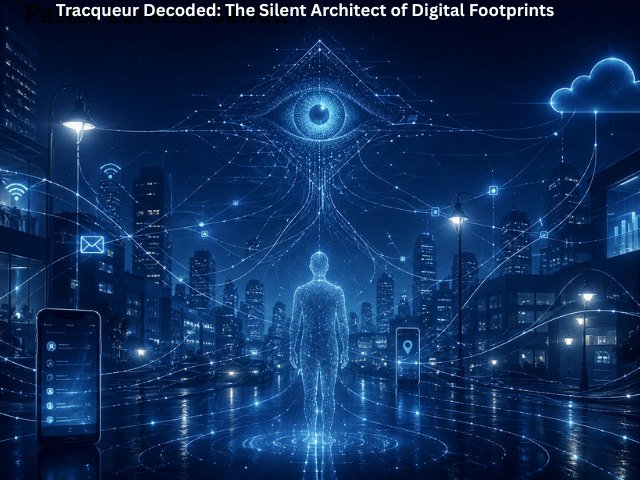
Every time you browse a website, tap a card, or simply walk through a mall, something quietly watches. That something isn’t a person. It’s a tracqueur, a digital entity designed to follow, record, and interpret movement across online and offline spaces.
Most people never notice the tracqueur at work. Yet, it builds the invisible map of modern life. From the ads you see to the recommendations you get, a tracqueur decides what reaches you. Understanding this silent architect isn’t just for tech experts. It’s for anyone who uses the internet, owns a smartphone, or values their privacy.
In this article, we’ll decode the tracqueur completely. You’ll learn how it works, why it matters, and where it’s taking us next.
Introduction: Why Tracqueur Matters More Than You Think
Let’s start with a simple question: Who knows where you were last Sunday? Your friends might. Your family might. But a tracqueur definitely does often with more accuracy than you remember yourself.
A tracqueur isn’t just spyware or a hacker’s tool. It’s a structured system of data collection used by legitimate companies, apps, and services. Think of cookies, location markers, device fingerprints, and even loyalty cards. All of these act as small tracqueurs.
Why does this matter? Because the tracqueur has moved from optional to unavoidable. You cannot use a modern smartphone without engaging with at least half a dozen tracqueurs daily. They help navigation apps find routes. They let streaming services remember where you paused a movie. But they also build deep profiles about your habits, fears, and desires.
Ignoring the tracqueur today is like ignoring electricity in the 20th century. It’s everywhere. The only real choice is understanding it or being controlled by it. That’s why this topic matters more than most people think.
The Anatomy of a Tracqueur: From Code to Consciousness
To truly understand a tracqueur, we have to look under the hood. A tracqueur isn’t one single thing. It’s a layered process.
At the bottom layer, you have code, usually JavaScript tags, SDKs inside mobile apps, or embedded pixels in emails. This code wakes up the moment you interact with a digital surface. It records a simple event: “User opened page at 2:03 PM.”
The second layer is storage. That tiny event gets saved into a database. Over time, thousands of events from the same tracqueur form a pattern. This is where the “consciousness” illusion appears. The tracqueur doesn’t think, but it learns. Machine learning models analyze stored events to predict your next move.
The third layer is action. A tracqueur doesn’t just watch. It triggers outcomes. If it sees you searching for running shoes, it tells ad platforms to show you sports gear. That feedback loop is the heartbeat of modern digital marketing.
So, from cold code to seemingly intelligent behavior, the tracqueur mimics awareness. It’s not alive, but it acts alive enough to influence you daily
How Tracqueur Redefines Personal Data Flow
Before the tracqueur, data was mostly static. You filled out a form. That form sat in a file cabinet. Done. Now, data flows like water and the tracqueur is the plumbing. Every click, swipe, and pause becomes a data droplet. The tracqueur captures droplets in real-time, then redirects them to analysts, algorithms, and advertisers.
This redefinition has three major changes:
- Speed – Data moves in milliseconds. A tracqueur can notice you abandoned a shopping cart and send a discount code before you close the tab
- Granularity – Not just what you bought, but how long you looked, where you hesitated, and what you ignored.
- Linking – Different tracqueurs share information. Your in-store visit via a loyalty card connects to your online browsing via email address.
The result is a continuous loop. You act. A tracqueur records. The system responds. You act again. Most people never see the loop, but everyone lives inside it.
Beyond Surveillance: Unexpected Uses of [tracqueur] in Daily Life
When people hear “tracqueur,” they think of surveillance. But many uses are surprisingly helpful.
Healthcare – Hospitals use tracqueur-like systems to track wheelchairs, infusion pumps, and even wandering dementia patients. No spying. Just safety.
Wildlife protection – Conservationists attach lightweight tracqueurs to endangered rhinos and elephants. Poachers are caught. Animals are saved.
Lost items – Bluetooth tracqueurs (small hardware tags) help find lost keys, wallets, and luggage. Millions of people use these every day without feeling watched.
Retail experience – Some stores use anonymous tracqueurs to see which aisles get crowded. Then they open more checkout lanes. Your wait time drops.
Agriculture – Farmers place soil tracqueurs in fields. Sensors detect dryness and automatically water only where needed. Less waste, more food.
So the tracqueur isn’t evil by nature. It’s a tool. The difference between helpful and harmful depends entirely on consent and transparency.
The Psychology of Being Tracked: Trust and the Tracqueur Effect
Knowing a tracqueur is watching changes how people behave. Psychologists call this “the observer effect.”
When users know a tracqueur exists, they often change their actions. They might search for less personal topics. They might avoid certain websites. Over time, this creates a quiet anxiety.
But here’s the twist: most people don’t change enough. Studies show that even when users learn about tracking, 78% continue the same behavior because stopping feels too hard. The tracqueur wins by exhaustion.
Trust breaks when tracqueurs hide. If an app secretly records location without permission, users feel betrayed. If the same app asks clearly and explains why, users often accept.
The healthiest relationship with a tracqueur is transparent, limited, and respectful. Without those three elements, the psychology flips from neutral to hostile.
Industries Transformed by Tracqueur: Logistics, Health, and Retail
Few technologies have reshaped entire sectors like the tracqueur.
Logistics – Package tracqueurs let you see exactly where your order is from warehouse to doorstep. Trucks, ships, and drones all report live positions. Lost packages have dropped by over 40% in companies using advanced tracqueurs.
Healthcare – Beyond equipment tracking, hospitals use tracqueurs to monitor hand hygiene. Sensors note when staff enter a room without washing. Infection rates fall. Also, wearable tracqueurs for heart rate and sleep patterns give doctors real data, not patient guesses.
Retail – Brick-and-mortar stores once had no idea what customers did inside. Now, optical tracqueurs (with privacy filters) show which products get picked up but not bought. Stores rearrange shelves. Sales improve by 15–25% in many cases.
Each industry found a unique way to apply the tracqueur. The common thread is efficiency doing more with less waste
Ethical Crossroads: Where Tracqueur Meets Privacy Rights
Here is the hardest question: Just because a tracqueur can track something, should it?
Ethicists divide into two camps. The first says consent is everything. If a user clicks “agree,” tracking is fine. The second says some data is too sensitive to ever track — even with consent. Think location inside a therapist’s office or time spent at a political rally.
Where is the line? Most countries now agree on a few bright lines:
- 1: No tracking of children under 13 without parental consent
- 2: No health or biometric tracking without explicit, separate opt-in
- 3: No selling of sensitive data to third parties without clear labeling
Yet enforcement is weak. A single tracqueur can be sold to a data broker, then resold twice more. The original consent gets lost in the chain. The ethical crossroads is simple: We need tracqueurs that respect boundaries, not exploits that find loopholes.
Legal Landscapes: New Regulations Shaping Tracqueur Deployment
Laws are finally catching up to the tracqueur. Three major regulations dominate today:
GDPR (Europe) – Requires any tracqueur to have a lawful reason. Most need user consent. Also gives people the right to see what data a tracqueur holds on them.
CCPA/CPRA (California) – Allows users to opt out of sale of their data collected by tracqueurs. Businesses must honor “Do Not Sell My Personal Information” links.
LGPD (Brazil) – Similar to GDPR. Demands transparency and purpose limitation. A tracqueur cannot collect data for “maybe later” reasons.
What’s coming next? Several US states are writing their own laws. India’s DPDP Act will require tracqueurs to delete data after purpose is fulfilled. China’s PIPL demands local storage for certain tracqueur data.
The trend is clear: The era of the invisible, unregulated tracqueur is ending. Compliance is becoming a competitive advantage.
User-Controlled Tracqueur: Opt-In Models and Transparent Design
Imagine a tracqueur that only works when you say “go ahead.” That’s the opt-in model. It’s gaining ground fast.
Apple’s App Tracking Transparency (ATT) is the most famous example. When an app wants to use a tracqueur across other companies’ apps, a pop-up asks for permission. Over 70% of users say no. That forced advertisers to change tactics.
Transparent design goes further. A well-designed tracqueur dashboard shows you:
What data is being collected
How long it will be kept
Who can see it
One-button delete
Some pioneering companies now offer “privacy cards” simple visual summaries of every tracqueur active on your account. The future belongs to tracqueurs that earn trust instead of sneaking in. Users are tired of hidden surveillance. Give them control, and they’ll often cooperate.
The Environmental Angle: Energy Consumption of Every Tracqueur
Few people connect a tracqueur to the environment. But every tracqueur runs on servers. Servers burn electricity.
A simple website tracqueur might send data to a cloud server 3,000 miles away. That server requires power, cooling, and network hardware. Multiply that by billions of tracqueur events daily — and you get a real carbon footprint.
Studies estimate that tracking technologies (including tracqueurs) account for nearly 1% of global internet energy use. That sounds small, but it equals the annual emissions of a medium-sized country.
Efficient tracqueurs exist. They batch data instead of sending single events. They use renewable-powered data centers. They delete old data to reduce storage energy.
The green tracqueur movement is small but growing. Next time you choose an app, check if its tracqueur practices include energy reporting. Every bit saved helps the planet.
How Tracqueur Shapes Human Communication and Behavior?
The tracqueur doesn’t just record communication — it reshapes it.
Years ago, people spoke freely in private messages. Now, many subconsciously think: “Will this trigger a tracqueur?” They avoid certain words like “bomb” or “depressed” even in harmless contexts. That self-censorship is real.
On social media, tracqueurs reward certain behaviors. Angry posts get more clicks. More clicks mean more tracqueur attention. More attention means more visibility. Over time, the tracqueur algorithmically boosts outrage because outrage is profitable.
Even in professional emails, tracqueurs that track open rates and click-throughs make senders more manipulative. They test subject lines endlessly to game the tracqueur’s scoring.
Human communication used to be messy and natural. The tracqueur pushes it toward optimized and artificial. Recognizing this pressure is the first step to resisting it.
The Future of Tracqueur: Predictions for Invisible Intelligence
Where is the tracqueur heading? Five clear trends:
- Invisible tracking – No pop-ups, no visible pixels. Future tracqueurs will use ultrasonic sounds between devices and Bluetooth cross‑listening. You won’t know they’re there.
- On-device tracqueurs – Instead of sending data to the cloud, analysis happens locally on your phone. More private, but harder to audit.
- Predictive tracqueurs – They won’t just record the past. They’ll guess your future actions (e.g., “This user will buy a coffee in 15 minutes”) with startling accuracy.
- Cross-reality tracking – As AR glasses spread, tracqueurs will track what you look at in the real world — a specific car, a restaurant menu, a stranger’s face.
- Self-destructing tracqueurs – Privacy laws will force automatic deletion after hours or days, not years.
The next decade will make today’s tracqueurs look primitive. Prepare for intelligence that follows without touching.
Securing the Tracqueur Ecosystem Against Bad Actors
Not all tracqueurs are legitimate. Bad actors — hackers, stalkers, rogue employees — weaponize tracqueurs for harm.
Key threats include:
- Maldvertising – A fake ad installs a malicious tracqueur that records keystrokes.
- Stalkerware – A hidden tracqueur on a partner’s phone shares location without consent.
- Data broker leaks – A legitimate tracqueur gets hacked. Millions of profiles stolen.
Securing the ecosystem requires three layers:
- Technical – Encryption, regular security audits, and zero-trust architecture.
- Legal – Heavy fines for tracqueur misuse, plus jail time for stalkerware creators.
- User education – Teaching people to review app permissions and use privacy tools.
A safe tracqueur world is possible. But it demands constant vigilance.
Conclusion: Living Alongside Tracqueur Without Losing Yourself
We cannot delete every tracqueur and return to a pre-digital world. That ship sailed years ago. But we can live wisely. Understand what a tracqueur does. Demand transparency. Use opt-in controls. Support ethical companies. And sometimes leave your phone at home for an hour. The tracqueur is a tool, not a tyrant. It can serve you or spy on you. The difference is awareness. Now that you’ve decoded the silent architect of digital footprints, you see the walls and the doors. Walk through the doors. Leave the walls behind.
FAQ Section
1. What exactly is a tracqueur in simple terms?
A tracqueur is any digital system that tracks user behavior — like cookies, location sensors, or app analytics. It records what you do online or offline to create patterns and trigger actions.
2. Is a tracqueur always illegal or harmful?
No. Many tracqueurs are legal and helpful, such as lost-item finders or hospital equipment trackers. Harm depends on hidden use or lack of consent, not the tracking itself.
3. How can I block or limit tracqueurs on my devices?
Use browser privacy extensions (like uBlock Origin), disable unused location permissions, turn on “Do Not Track” signals, and regularly clear cookies. On iPhones, enable App Tracking Transparency.
4. What’s the difference between a tracqueur and spyware?
Spyware is a malicious type of tracqueur that hides completely and steals data without permission. Legitimate tracqueurs disclose their presence and offer opt-out options.
5. Will future laws ban tracqueurs completely?
Unlikely. Instead, laws will require clear consent, data minimization, and automatic deletion. Complete bans would break essential services like navigation and fraud detection.