
Introduction
A grinder is a small but very important tool used for breaking down herbs, spices, or coffee beans into finer pieces. It is widely used because it makes grinding faster, easier, and more consistent. Whether you are using it in the kitchen or for personal use, a grinder helps improve the overall quality of the final result.
However, over time, every grinder starts collecting residue from regular use. This buildup affects not only its performance but also its cleanliness. Sticky material, oils, and fine particles get stuck between the teeth and inside small spaces. This is why many people search for how do you clean a grinder to restore its original condition.
Cleaning a grinder is important because it improves performance, removes buildup, and enhances flavor quality. It also prevents clogging, rust, and damage that can shorten its lifespan. In this complete guide, you will learn everything step-by-step, including deep cleaning methods, maintenance tips, mistakes to avoid, and expert advice for long-term care.
Understanding proper cleaning techniques ensures your grinder stays smooth, efficient, and long-lasting. A clean grinder always performs better and gives more consistent results compared to a dirty one.
What Is a Grinder and How It Gets Dirty
A grinder is a mechanical device designed to break down solid materials into smaller, more usable pieces. It works using sharp teeth or burrs that rotate and crush the material evenly. The most common types include herb grinders and coffee grinders, each designed for different purposes but working on the same basic principle.
Grinders come in different structures such as 2-piece, 3-piece, and 4-piece models. A 2-piece grinder is simple and compact, while a 3-piece grinder includes a storage section. A 4-piece grinder is more advanced and includes a fine mesh screen that collects small particles.
Over time, grinders become dirty due to continuous use. Herb grinders collect sticky resin and fine dust that stick between teeth and threads. Coffee grinders develop oil buildup from beans, which hardens over time and affects performance. These residues slowly reduce efficiency and make grinding harder.
If not cleaned regularly, this buildup can cause uneven grinding, bad smell, and even mechanical resistance. That is why understanding how dirt builds up is the first step in learning how do you clean a grinder effectively.
Tools You Need to Clean a Grinder Properly
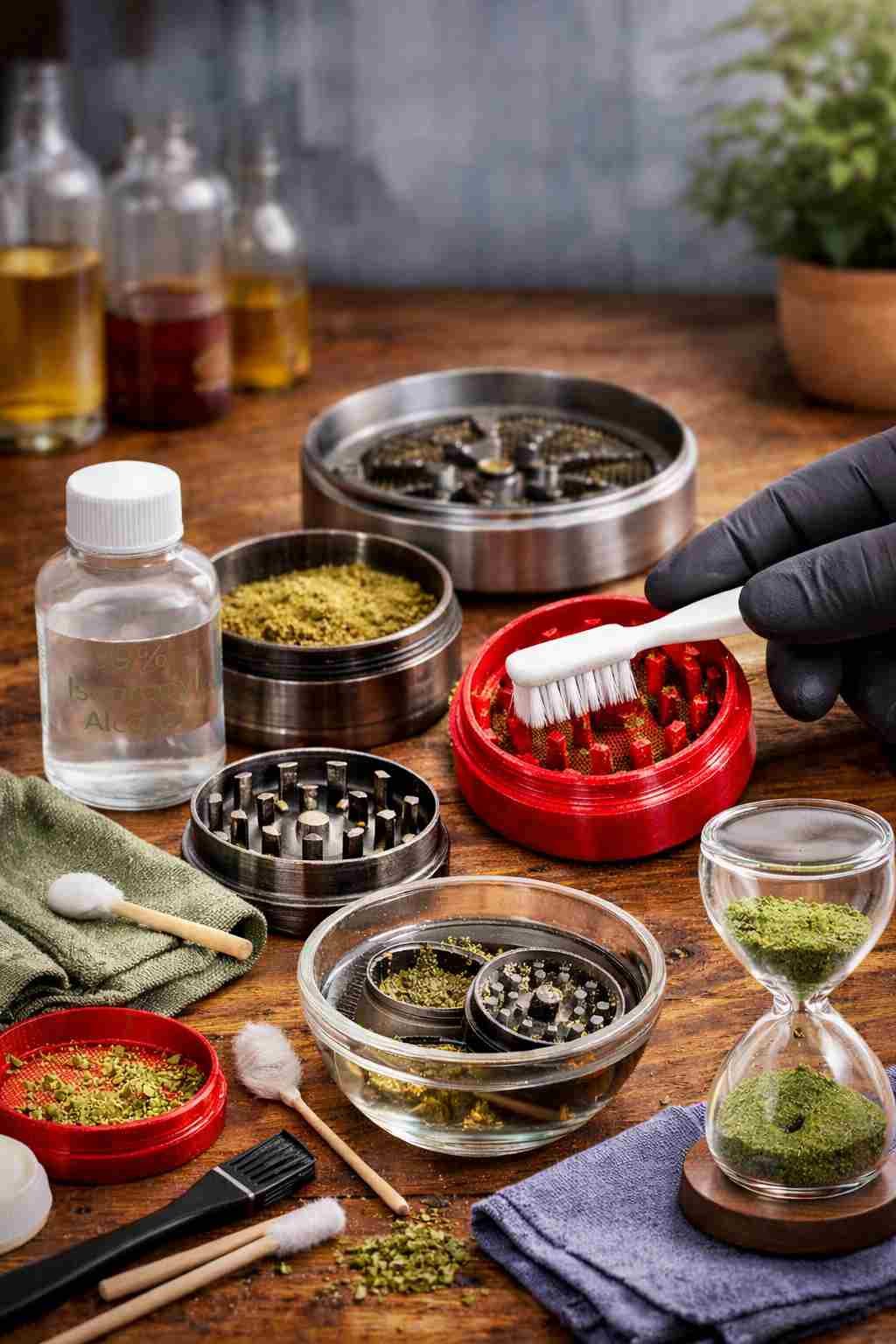
Before starting the cleaning process, it is important to prepare the right tools. A soft brush or toothbrush is essential because it helps remove small particles from tight areas without damaging the grinder’s surface. A toothpick or small scraper is also useful for cleaning corners and threads where buildup is harder to remove.
Isopropyl alcohol (preferably 90% or higher) is commonly used for metal grinders because it dissolves sticky residue quickly. For plastic grinders, warm water with mild soap is safer and prevents damage. Using the wrong cleaning solution can reduce the lifespan of your grinder.
You will also need a microfiber cloth or paper towels for drying and wiping parts after cleaning. A small bowl or container is useful for soaking grinder parts during deep cleaning. These simple tools make the entire process easier and more effective without requiring expensive equipment.
How Do You Clean a Grinder
Disassemble the Grinder
The first step in learning how do you clean a grinder is to completely disassemble it. Remove all parts carefully, including the lid, grinding chamber, screen, and collection compartment. Each part should be cleaned separately to ensure proper results.
Full disassembly is important because dirt often hides in small spaces that are not visible. If the grinder is not fully taken apart, cleaning will not be effective and residue will remain inside.
Remove Loose Residue First
Before using any liquid, gently tap the grinder to remove loose particles. Use a brush or toothpick to clear visible buildup. This step helps reduce deep cleaning effort and prevents clogging during washing.
If you are using a herb grinder, you can also collect fine particles before cleaning. This ensures nothing valuable is lost during the cleaning process.
Deep Cleaning (Soaking Method)
For metal grinders, soaking is the most effective method. Place all parts in isopropyl alcohol for 30–60 minutes to dissolve sticky buildup. For plastic grinders, use warm soapy water instead to avoid damage.
Wooden grinders should never be soaked because water can damage the material and cause cracking or swelling. Choosing the right method based on material is very important for safe cleaning.
Scrub Every Part Carefully
After soaking, use a toothbrush or soft brush to scrub each part gently. Focus on teeth, threads, and corners where residue builds up the most. This step ensures all hidden dirt is removed completely.
Take your time during this process because rushing can leave residue behind. A clean grinder should feel smooth and free from any sticky texture after scrubbing.
Rinse and Remove Chemicals
Once scrubbing is complete, rinse all parts thoroughly with warm water. This step removes any remaining alcohol or soap. It is important to ensure no cleaning chemicals are left behind.
Leftover chemicals can affect taste, smell, and safety. Proper rinsing guarantees that your grinder is fully clean and ready for safe use.
Dry Completely Before Reassembling
Allow all parts to air dry completely before putting the grinder back together. Moisture can cause rust in metal grinders or mold in other materials.
Drying is often the most ignored step, but it is very important. A completely dry grinder ensures smooth performance and long-lasting durability
Deep Cleaning Methods for Stubborn Buildup
Sometimes regular cleaning is not enough, especially when buildup has hardened over time. In such cases, deep cleaning methods become necessary. One effective method is freezing the grinder. This makes sticky residue brittle and easier to remove.
Alcohol soaking is another powerful method for metal grinders. It breaks down oil and resin quickly. For stubborn areas, a combination of brushing and gentle scraping can be used to fully clean tight spaces.
Compressed air is also useful for coffee grinders to remove fine dust. Cleaning tablets designed for electric grinders help remove oil buildup and improve performance.
How to Clean Different Types of Grinders
Metal grinders are the easiest to clean and usually respond well to alcohol soaking and brushing. Plastic grinders require mild soap and warm water only. Wooden grinders should only be cleaned with a dry brush.
Electric or coffee grinders need extra care. Always unplug before cleaning. Burrs should be cleaned carefully, and water should never enter the motor area. Each type requires a different cleaning approach for safe maintenance.
How Often Should You Clean a Grinder
Light cleaning should be done every few uses to prevent buildup. Deep cleaning is recommended every 2–4 weeks for regular users. Coffee grinders may need more frequent cleaning depending on usage.
Regular maintenance prevents heavy buildup and keeps the grinder working smoothly. It also reduces the need for frequent deep cleaning, making maintenance easier in the long run.
Common Mistakes to Avoid When Cleaning a Grinder
Many users make mistakes such as using too much water, which can cause rust. Not drying properly can lead to moisture buildup and mold formation.
Using sharp metal tools can damage grinder teeth. Cleaning without full disassembly leads to incomplete results. Harsh chemicals like bleach should also be avoided as they can damage material and leave harmful residue.
Tips to Keep Your Grinder Clean Longer
Cleaning your grinder regularly is the best way to keep it in good condition. Freezing it occasionally helps loosen residue and makes cleaning easier. Using a brush after every few uses prevents heavy buildup.
Storing the grinder in a dry place helps prevent moisture issues. Running a dry cleaning routine occasionally reduces the need for deep cleaning and keeps performance smooth.
Deep Cleaning vs Regular Maintenance
Regular maintenance and deep cleaning are both essential parts of understanding how do you clean a grinder effectively. Regular maintenance is a light cleaning method done frequently after each use. It involves brushing out loose particles, tapping the grinder gently, and wiping visible residue. This helps prevent buildup from becoming too strong.
Deep cleaning is a more detailed process used when residue becomes hard and sticky. It involves full disassembly, soaking parts in cleaning solution, and scrubbing each component carefully. Deep cleaning restores the grinder to near-original condition.
In simple terms, maintenance prevents problems, while deep cleaning fixes them. Both methods are important for keeping your grinder efficient, smooth, and long-lasting.
Health and Flavor Impact of a Clean Grinder
A clean grinder directly affects both health and flavor quality. When residue builds up inside, it mixes with fresh material and changes its natural taste. This can result in bitter or unpleasant flavors.
From a health perspective, dirt and moisture inside a grinder can lead to bacteria or mold growth. This is especially harmful if the grinder is stored in humid conditions. A clean grinder ensures safe and hygienic use every time.
A properly maintained grinder preserves the natural aroma and freshness of ingredients. It ensures consistent quality and improves the overall experience of use.
Time for a Grinder Deep Clean
If your grinder becomes hard to turn, it is a clear sign of buildup inside. Uneven grinding is another indicator that cleaning is needed. A bad or unusual smell also shows old residue accumulation.
Sticky movement during rotation means internal parts are clogged. In coffee grinders, a burnt or bitter smell indicates oil buildup. These signs clearly show that a full deep cleaning is required.
Benefits of Cleaning Your Grinder Regularly
Regular cleaning improves performance and ensures smooth operation. It enhances flavor quality by removing old residue. It also increases the lifespan of the grinder by preventing damage.
A clean grinder reduces effort during use and makes grinding faster. Over time, maintenance becomes easier and more efficient.
FAQ’s
Can I clean a grinder with water only?
Only plastic grinders. Metal grinders need alcohol for proper cleaning.
Can I put a grinder in the freezer?
Yes, it helps loosen sticky residue.
What is the fastest way to clean a grinder?
Brushing and alcohol wiping is the fastest method.
Is alcohol safe for grinders?
Yes, for metal grinders only.
How do I clean sticky grinder teeth?
Use a toothbrush with alcohol or warm soapy water.
Conclusion
Knowing how do you clean a grinder is essential for maintaining performance, hygiene, and durability. A clean grinder works smoothly, lasts longer, and produces better results.By following proper cleaning steps, using the right tools, and maintaining regular care, you can easily keep your grinder in excellent condition. Simple habits make a big difference in long-term performance and reliability.